Free construction daily report template
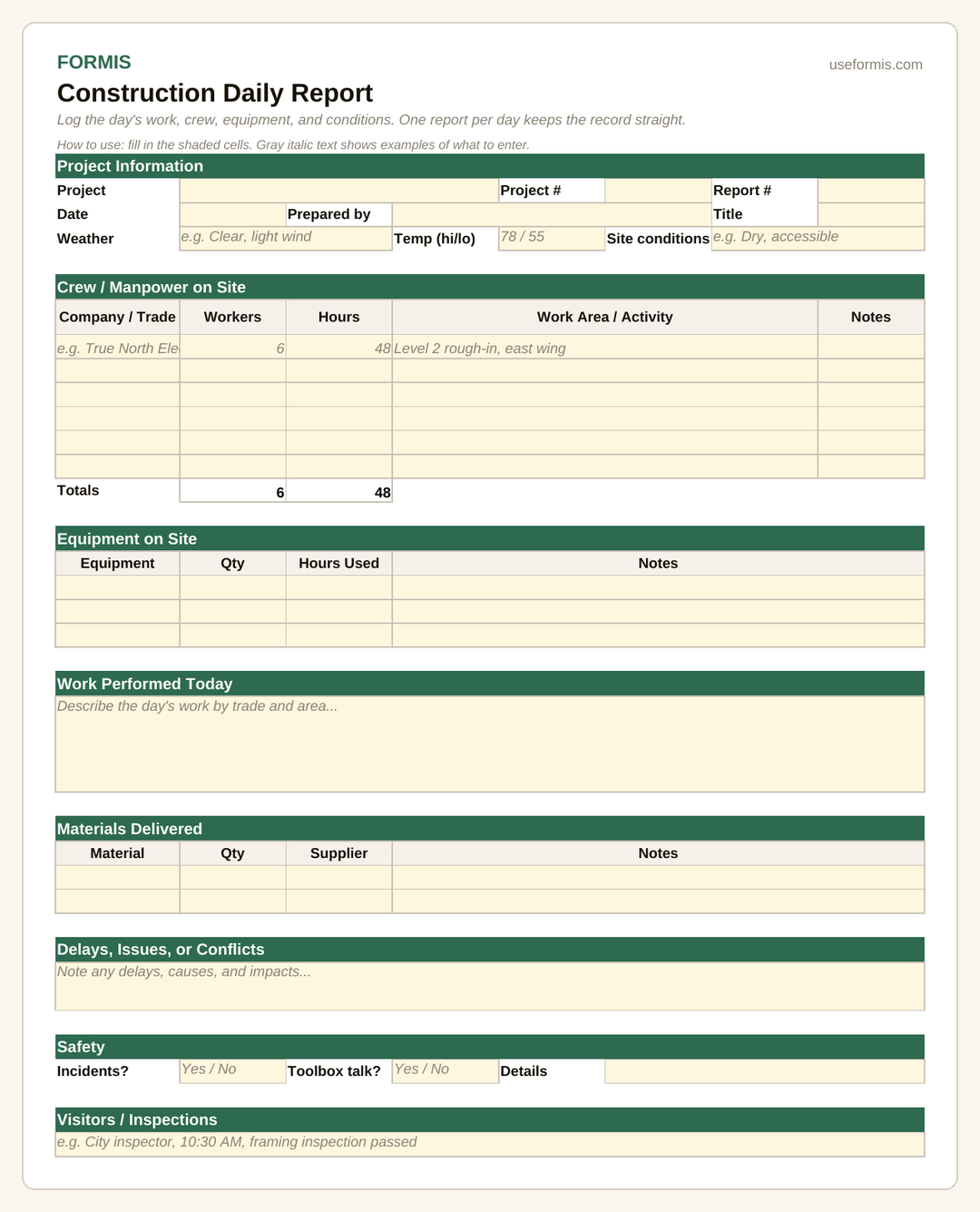
Log the crew, the work, and the conditions, every day, so the record holds up when it matters. Download the Excel or PDF version below, no email required.
What belongs in a construction daily report
A daily report is the contemporaneous record: who was on site, what got done, what stopped it. It is your defense in a claims dispute and your memory six months later.
What belongs in a good one: crew count and hours by trade, equipment on site, weather, materials delivered, and anything that caused a delay, written the day it happened, not reconstructed from memory a week later.
The common failure mode is reports that only get filled in when something goes wrong. A gap in the log reads worse than a bad day logged honestly. Log delays and safety notes in the moment, not at five o'clock from memory.
Runs live in Formis
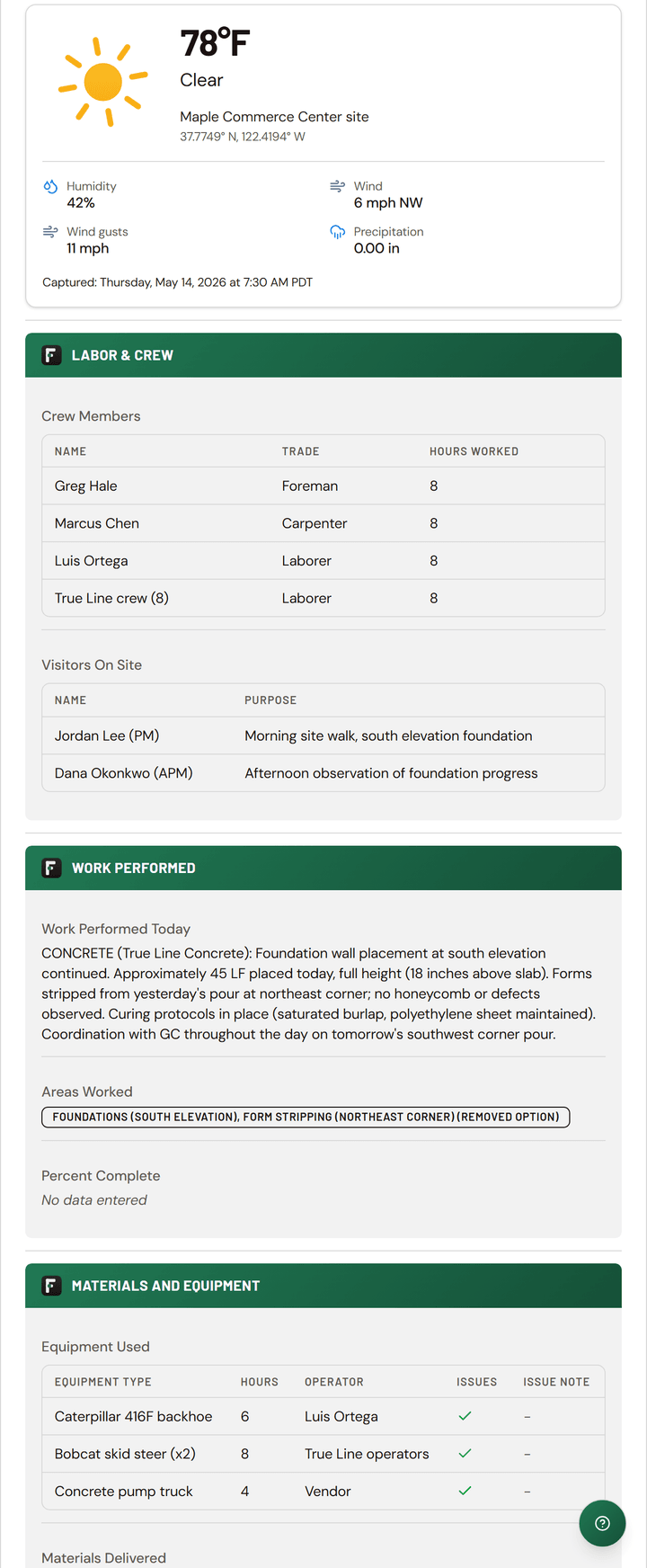
This exact report runs live in Formis. Your superintendent fills it out from a phone on site, weather and crew hours included, and it becomes part of the permanent project record, searchable, never lost in a truck console or a missed email. No report means no record, Formis makes it fast enough that it actually gets filled in.
What should a daily report include?
Crew and hours by trade, equipment on site, weather conditions, materials delivered, work performed, and any delays or safety notes. The goal is a complete, same-day record, not a summary written later from memory.
Who is responsible for filling out the daily report?
Typically the superintendent or project engineer on site, though on larger jobs a foreman may log their crew's portion. One person should own submitting it each day so it does not get missed.
How long should you keep daily reports?
Many contractors keep them for the life of the project plus several years, since they are often the record referenced in a delay claim or dispute long after substantial completion. Check your contract and your insurer's guidance for a specific retention period.