Free RFI template
Ask the question once, with the right reference, and keep the answer on the record. Download the Excel or PDF version below, no email required.
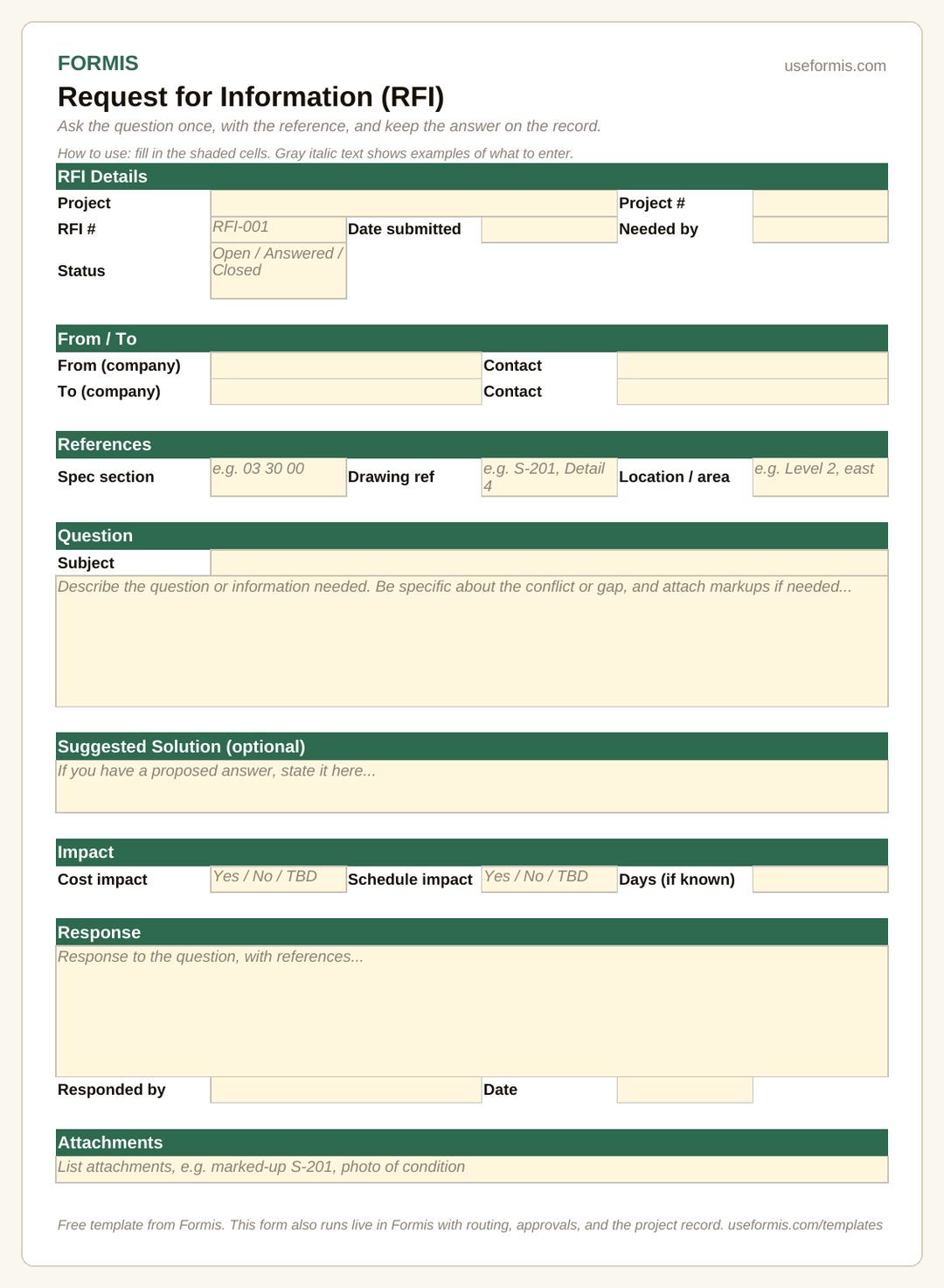
What goes into a construction RFI
An RFI is the formal way to ask a question when the drawings and spec do not give you a clear answer, before you guess, before you build it wrong.
A good RFI does three things: it points to the exact spec section or drawing detail in question, it asks one question at a time, and it offers a suggested solution when you have one. Vague RFIs bounce back asking for clarification, and every round trip costs days.
Set a response-needed-by date tied to your schedule, not a generic deadline. That date is what tells the reviewer this is holding up work.
Runs live in Formis
This exact form runs live in Formis. Fill it out in the field, reference the spec section or drawing, and it routes straight to the right reviewer, no chasing it down over email. The response and the full history stay on the project record, not buried in an inbox.
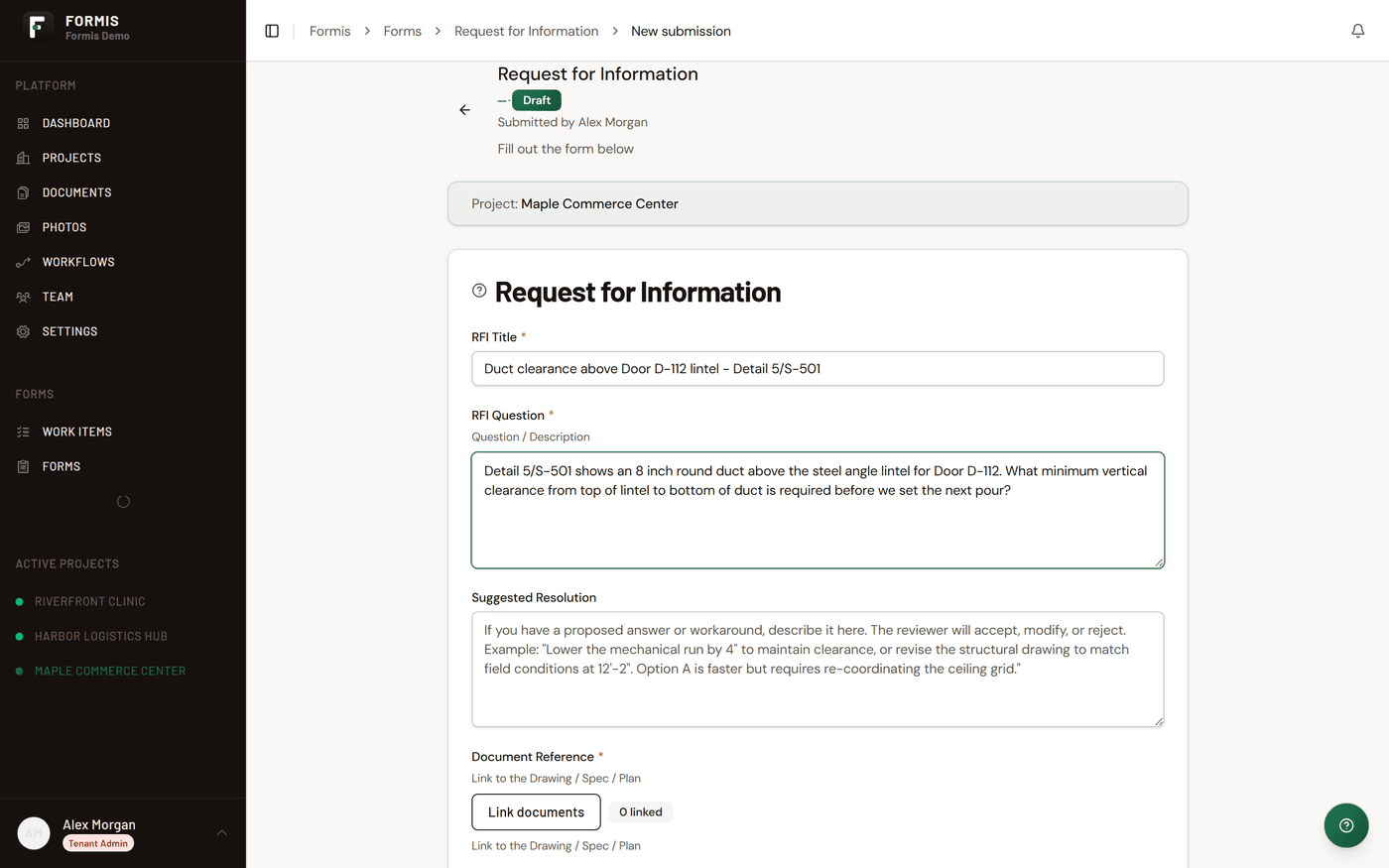
What should an RFI include?
A clear, specific question tied to a spec section or drawing reference, the location or area it affects, a response-needed-by date, and a suggested solution if you have one. One question per RFI keeps the answer clean and the record clear.
Who is responsible for answering an RFI?
Usually the design team, the architect or engineer of record, though a general contractor reviewer sometimes checks it first for completeness before it reaches them. Whoever is named as the reviewer owns the response.
How long should an RFI response take?
It depends on the contract, but the RFI itself should state the date you need it back, tied to what it is holding up in the schedule. An RFI without a date is easy to deprioritize.